

Disclosure: This post contains an affiliate link to Wealthy Affiliate. If you join through it, I may earn a commission at no extra cost to you.
Black Friday is upon us. Amazon is gearing up for another season of relentless orders. A lot of family members will be shopping on Amazon. What if all of our family members were to make their seasonal purchases through our links? Great idea right?
WRONG!!!!
I had a similar idea myself. What if the family member who’s struggling most signs up for Amazon Associates, everyone else shops through that person’s links, and the commissions add up to a little extra money for someone who needs it? Nobody pays more, and everybody wins. It’s a generous idea, BUT it breaks one of Amazon’s oldest rules. It will cost that person the account and every dollar they’ve earned.
The Rule: Your Family Can’t Buy Through Your Links
Amazon doesn’t count purchases made through your links by you, or by friends and relatives you allow, ask, or encourage to buy. Those orders aren’t “qualifying purchases,” so they earn no commission. Amazon’s own help page says the exclusion covers orders for products used by you, your friends, your relatives, or your associates in any manner. (Amazon Associates help: placing orders for yourself).
The penalty is bigger than a missed commission. Amazon closes accounts over this. Termination notices that affiliates have posted online list the violation as purchases “made by your friends, relatives, employees, contractors, or business relations.” When Amazon closes an account for breaking the agreement, it also keeps the commissions it hasn’t paid out yet. Your relative loses the account and the money in it.
Why New Bloggers Over 50 Break This One First
We’re wired to lean on family. When you start something new at 55 or 65, the people closest to you want to help, and buying through your link feels like the easiest way to do it. Those first few sales also feel like proof that the business works, so nobody stops to ask whether they’re allowed.
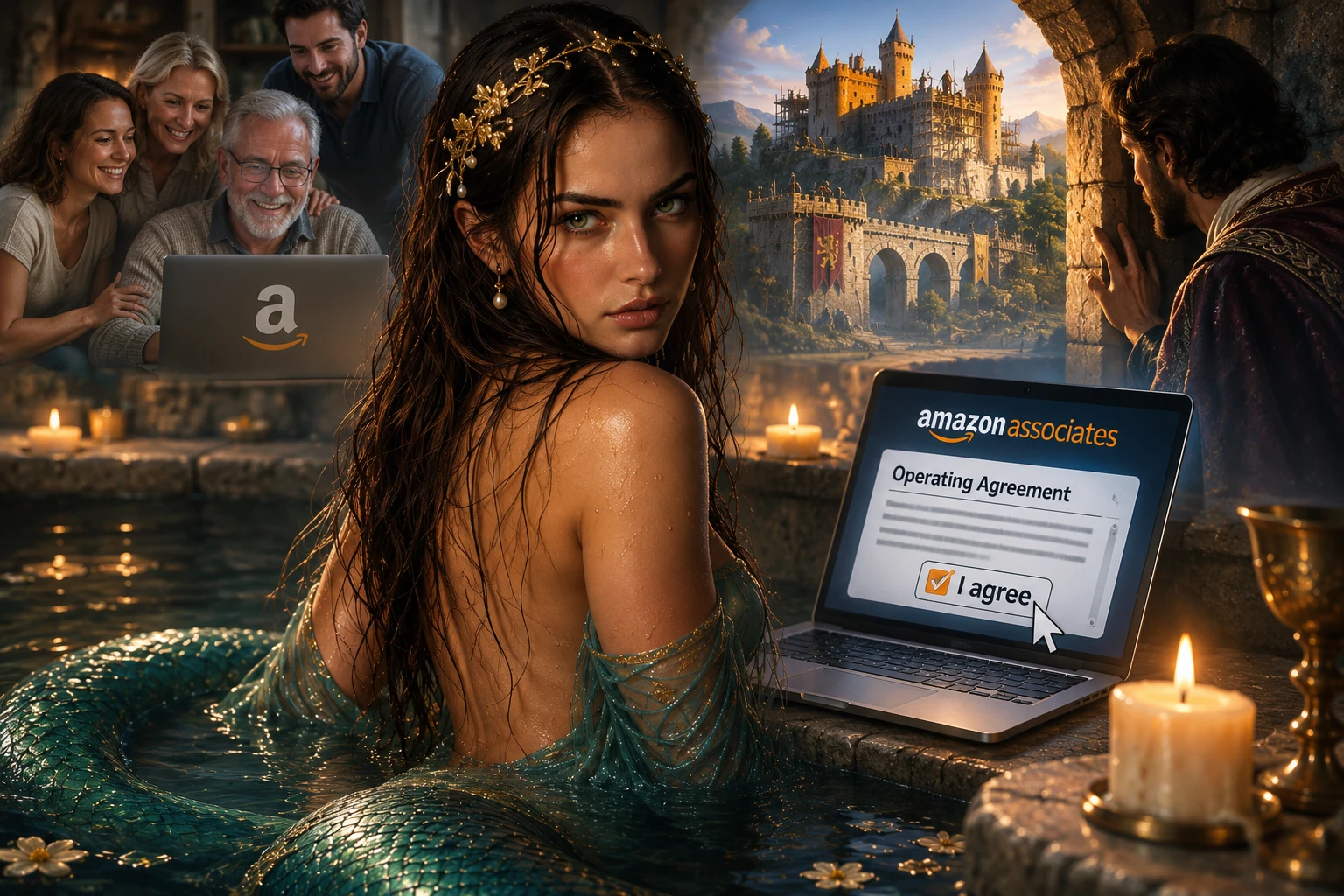
The bigger reason is that almost nobody reads the agreement. Amazon spreads its rules across several separate documents, and most of us click “I agree” and start building. You can’t follow a rule you never read.
That mistake is older than the internet. In the French legend of Melusine, Raymondin married her on one condition: he would never look in on her on Saturdays. He kept his word for years while she built him castles and a fortune. Then he broke the condition once, and he lost her and the life she’d built for him. If you’re the type who clicks “I agree” without reading, the Chamber of Melusine has a 10-sign audit for that.
The 2026 Changes That Tightened the Rules
Amazon updated its Associates agreement effective April 14, 2026. You can read the full list on Amazon’s What’s Changed page. Four of the changes matter most if you’re just starting.
Paid and Boosted Posts No Longer Count
Purchases from customers who arrive through any paid or boosted ad that links to Amazon are now disqualified, even if you never used a banned keyword. Amazon says limited exceptions apply, but the change page doesn’t list them. The safe move for a beginner is simple: don’t pay to boost a post that links to Amazon, and don’t let anyone else boost it for you.
Orders Have a 180-Day Limit
A product now has to ship and be paid for within 180 days to earn a commission. Most everyday orders clear that easily. It mainly matters for preorders and orders where payment is delayed.
Commissions Are Narrower
Onsite commission now applies to purchases of the same product variant you linked, or a variant in the same product category, instead of anything the shopper happens to buy. Write about one specific product and link that exact product.
Your Content Has to Add Something
Amazon now defines original content as content with commentary, analysis, or transformation that adds value. A list of products with no opinion behind it doesn’t meet that bar. This is where being over 50 helps you, because you have decades of experience with what works, what breaks, and what’s worth the money. Put that in every post.
What Your Family Can Do Instead
Your family can still help, and plenty. They can share your posts and gift guides in their own feeds and Facebook groups. When strangers buy through those shares, the sales count. They can test products so you can write honest reviews from real use. They can also read your drafts and tell you where they got lost, which is more useful than you’d think.

The rule to give them is short. They can share your work, but they can’t buy through your links, and they can’t pay to boost a post that links to Amazon.
Quick Rules Checklist
- Don’t buy through your own links.
- Don’t ask, or let, family and friends buy through your links.
- Don’t pay to boost a post that links to Amazon, and don’t let anyone boost it for you.
- Write real commentary: your opinion, your comparisons, your experience.
- Link the exact product you’re writing about.
- Read the Operating Agreement once, and check the What’s Changed page when Amazon updates it.
[PLACEHOLDER: MailerLite form. “Get the printable Amazon Associates Rules Checklist.” Build or cut.]
Learn the Rules Before You Break Them
I started my online business at 62 and joined Wealthy Affiliate in May 2023. A few months later I’d climbed to #20 in the member rankings and became a WA Ambassador. WA teaches you how affiliate programs work before you jump in, so you learn rules like this one before they cost you an account.
See how Wealthy Affiliate works
Pick Your Niche, Learn the Rules, Then Build
The order matters. Choose a niche you can write about with real experience, learn the rules of the programs you join, and then start building. If you haven’t picked your niche yet, start there.
Your family wants to help you succeed. Let them share your work, and keep their shopping out of your links.